

More
M


We spoke to some more of the 18 amazing artists working on the Route 66 Remixed project with the City of Albuquerque and us (Meow Wolf that is).
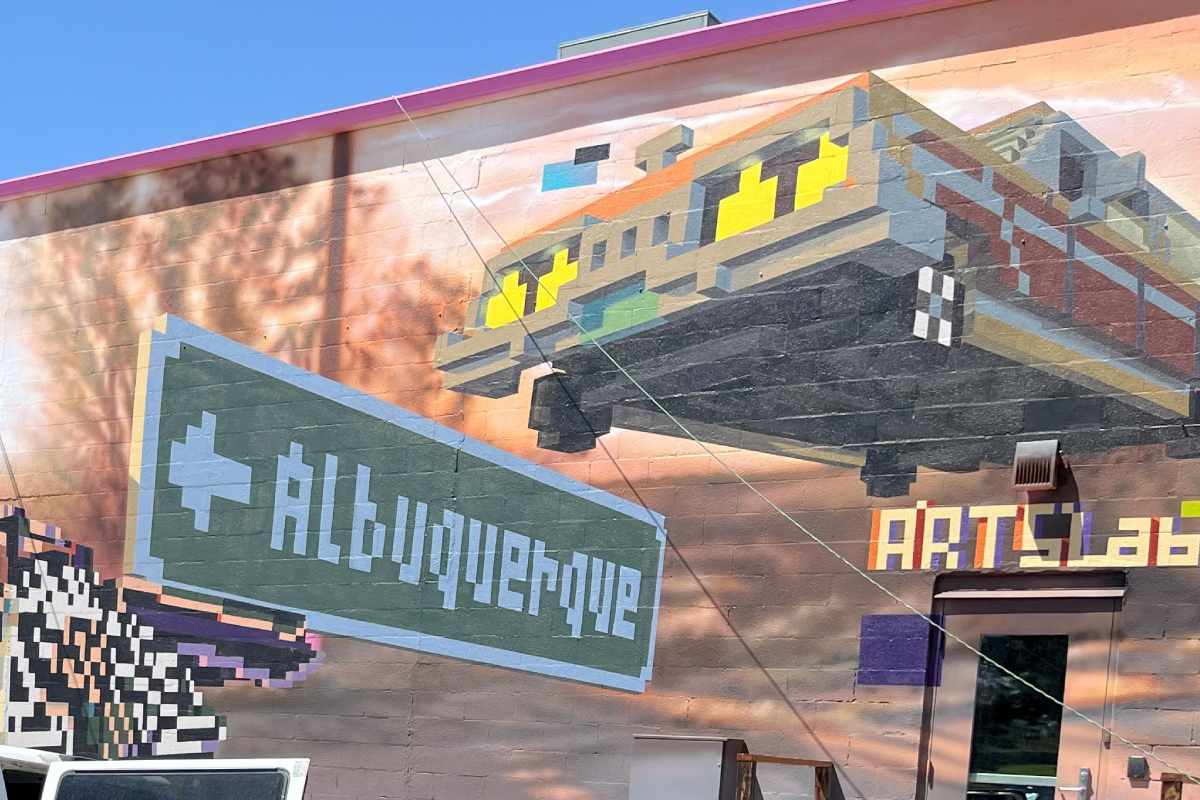
Photo by Jessica Vredenburg.
We’re back with another round of interviews about the City of Albuquerque and Meow Wolf’s Route 66: Remixed project! Missed part one, and want to learn more about the project/hear from our first set of artists? Read here to get you started, and in the meantime, let’s get into chatting with today’s group of amazing artists.
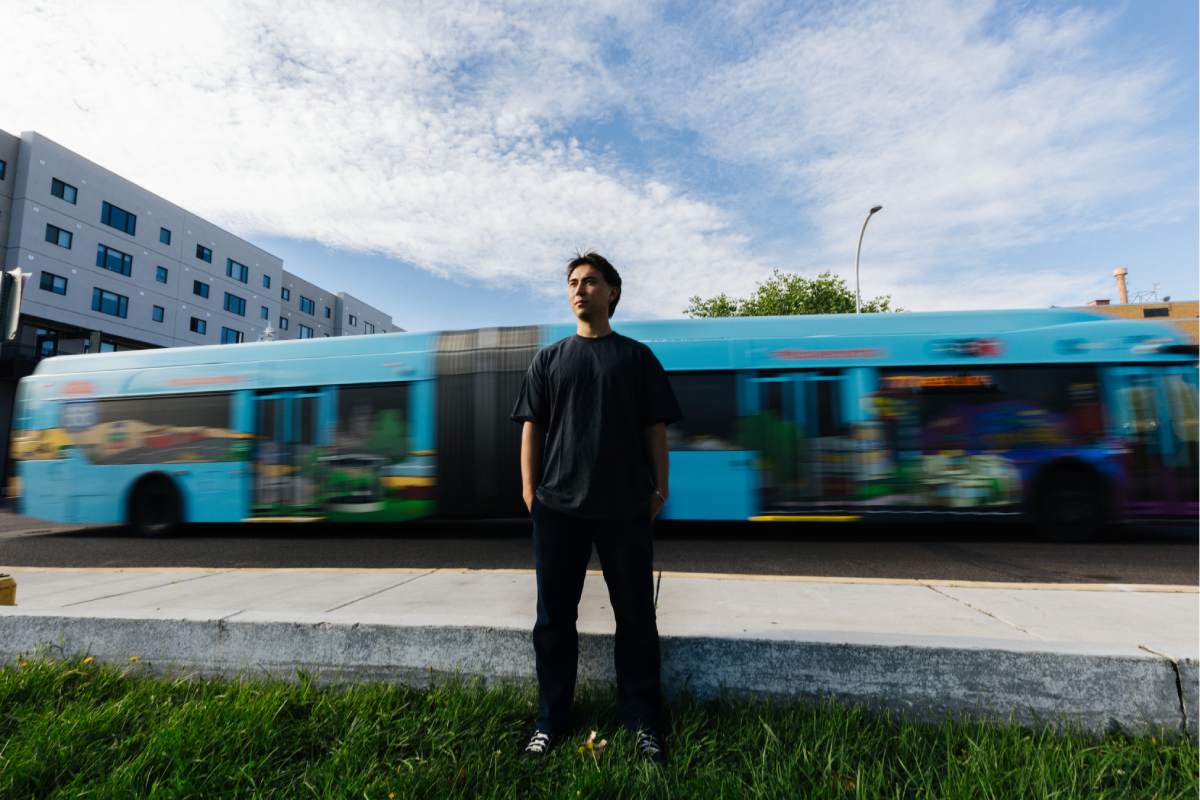
I am Dante Tsuzuki Betsch, a multimedia communications designer. Born in Taos and raised my entire life in Albuquerque, I've had the opportunity to work across the world. My projects are often driven by community—exploring the intricacies that both differentiate us and unite us together. Outside of design, I like to spend my time outdoors, whether exploring new lands or shredding the slopes.
I've been fortunate to design vinyl wraps for Albuquerque's ART buses themed around Route 66's relationship with our city. As a mobile platform, the bus will travel east and west along Central Avenue. This unique canvas allows the design to be viewed across all communities that still engage with Route 66 here, while also providing transportation to my fellow artists' installations.
I am classically trained in textile design, which grew out of my background and love for illustration. I never thought I would be designing bus wraps when I was younger, but one thing that always fuels me is a good challenge—which I think the City of Albuquerque understood when bringing me on board.
My love for textile design revolves around its visceral and communal artistic processes. Each step in this process has tactile elements, which I foresaw would unfortunately be missed in designing a bus wrap. Besides the application of the wrap itself, every step in creating the design would be digitally fabricated.
The question became: how could I pinpoint moments within the design process that could include community and be more visceral? Neither were necessary for the final result, but I believe both were pivotal in elevating the design. This was reflected by hand-drawing every element before vectorizing the final design, and by seeking inspiration and engagement with community members across different communities here in Albuquerque that would have useful insight on the motifs I was designing.
Understanding the community and Route 66's relationship with Albuquerque was crucial before I began designing…I know Route 66 has a powerful presence in our community, especially for multi-generational families with nostalgic memories attached. It was incredibly important to think of elements that would make it feel authentically Burque—something that would make you feel proud seeing this bus ride down our streets.
It was also crucial to understand the medium. It's not just a blank canvas—it's a bus with windows, doors, and wheels. It should flow among different backgrounds and adapt to whether you're driving alongside or watching it pass. Each car in the design sits at eye level…creating a feeling that the ART Bus is sharing the same road as us. The project was almost begging me to incorporate lowriders—an aspect of Burque culture I was unfortunately quite unfamiliar with at the time. Shoutout to Joe and Rob, two artists in their own right, who welcomed me with open arms into Albuquerque's extremely diverse lowrider culture. They provided amazing insights that gave me a stronger understanding of which car models, colors, and emotions would work best.
Beyond creating something intricate and beautiful, if the design could be a portal for those who remember Route 66 for its nostalgia, or for those who find excitement in this land's potential moving forward, it would add another layer to the final design. When hearing my fellow artists, it was clear that the relationship between Route 66 and Albuquerque's past, present, and future evokes these emotions I wanted to highlight. The bus being a three-dimensional platform, I could speak to these relationships on different sides of the design. This led to using sunrise and sunset themes. On the sunrise side, I featured my fellow artists' artwork in each window as portals of possibilities for our city moving forward. On the sunset side, I featured brightly lit Albuquerque neon signs through the windows to evoke nostalgic emotions, inspired by a memory I think I share with many: driving down Central in the backseat of your parents' car at night, with brightly colored neon signs shining down on you.
The design is Route 66, but it's really intended to be for us—Albuquerque. It will live with us, share the same roads, and coexist with us, so it should reflect us, not anywhere else. It hopefully has an element that everyone—whether visiting or part of our community—can connect with. It's intended to be fun, engaged with, and a celebration of this historic moment.
My name is Gael Luna and I’m a visual artist creating art that celebrates and shares people’s reality through art, culture, and conversation. I believe people are the experts of their own stories, but too often in today’s societies, narratives are built without their input. So for over a decade, I have invited people to create art with me.
I build relationships, conduct research, hold community conversations and document the experiences through all forms of media. And with the stories in hand, I create art that are vibrant and powerful representations, including large scale sprints for installations.
Where is your piece located, and what sort of design are you working on?
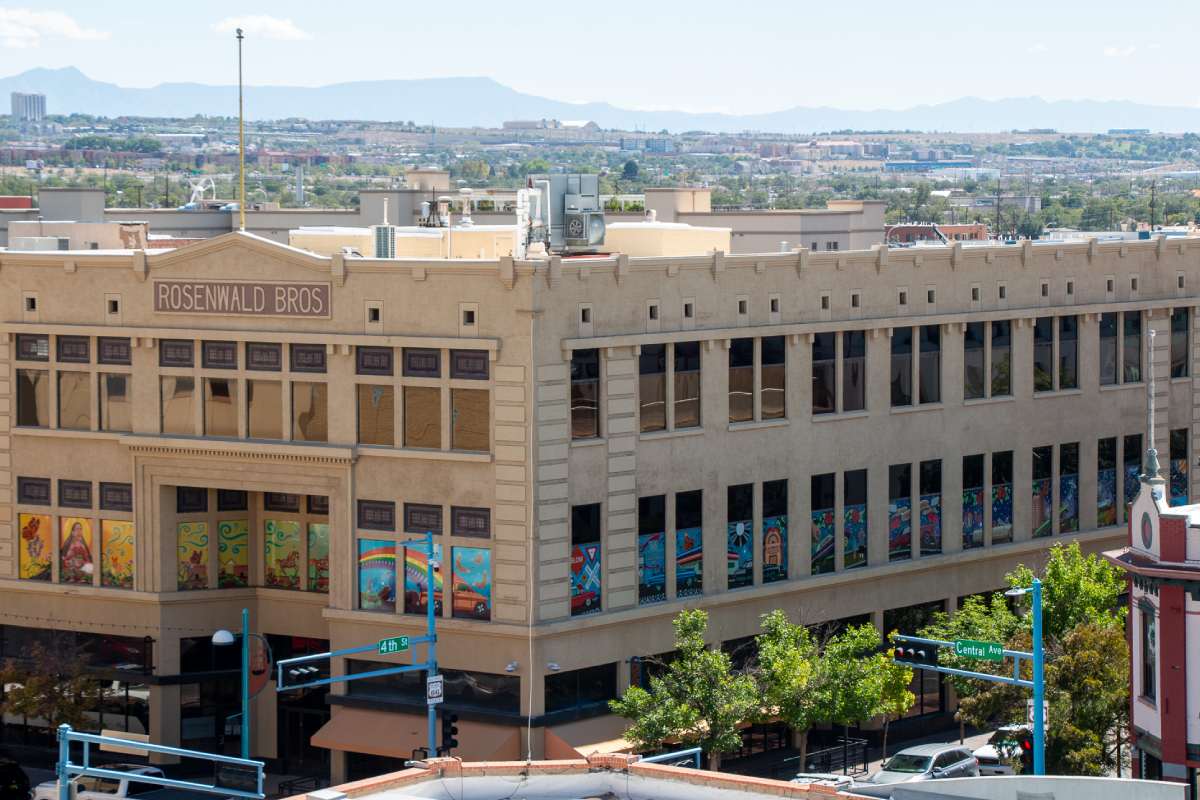
The site is located on Fourth and Central in downtown Albuquerque. It is the only site in the nation where the original Route 66 road intersects with the new Route 66 road. So I feel really honored to have this specific unique and special site for me to create art.
I’m a visual artist primarily using digital tools like Adobe illustrator. And so I have created what I think is the first of its kind in Albuquerque and New Mexico: a vinyl mural that goes around the windows of the building. So it starts from Central and it goes around to Fourth Street.
Tell us a little about the installation and the inspirations involved.
I had in mind the very unique site and [the idea of] really honoring and lifting the Albuquerque culture. Primarily, [I thought of] the downtown cruise that happens every Sunday, with all different types of community coming together around cars. So really celebrating, being in community with, and honoring their legacies and stories. Having that in mind, I decided to create an art piece that is like a cruising road traveling throughout time.
We start at the beginning of time with a landscape. And because the road is known as the mother road, I did the mountains as this Indigenous female bodied person [that is] a mother earth who is creating the road. The person is the mountains, the earth, flowers, the clouds in the air; and then her hair turns into stars, creating the road itself. After that, we have a Pueblo, honoring the people who are originally from here. And we have them connected to animals. The animals were inspired by alebrije style, [which are] spiritual animals. I wanted to put part of my culture as a Mexican immigrant person in this piece.
And then we have the first type of vehicle transportation—the train—and individuals who are making the road and actually creating the cruise. We see our first car starting the Route 66 cruise and then go into a Route 66 diner. I was inspired by the 60s and 70s…when people were traveling throughout the country and stopping at diners—bringing it back to the family road trip.
From the diner era, we go into cruising in downtown Albuquerque. I wanted to uplift the lowrider culture which is centered in community and family. So we have an illustration [representing] a father and son or two brothers, connecting through cars. And then we have a couple to really represent the New Mexican Familia. The cruise then continues to go through downtown Albuquerque into space, which to me is representation of the future.
The inspiration that I got for this art piece was mostly community, the history, downtown Albuquerque, the land, really honoring those who came before us and really uplifting the future. Especially using what this road has created for our community, for road trips as families, and what it can do for us in the future.
I’m just feeling really honored to be part of this team and this exhibition and can’t wait to showcase what I’ve made.
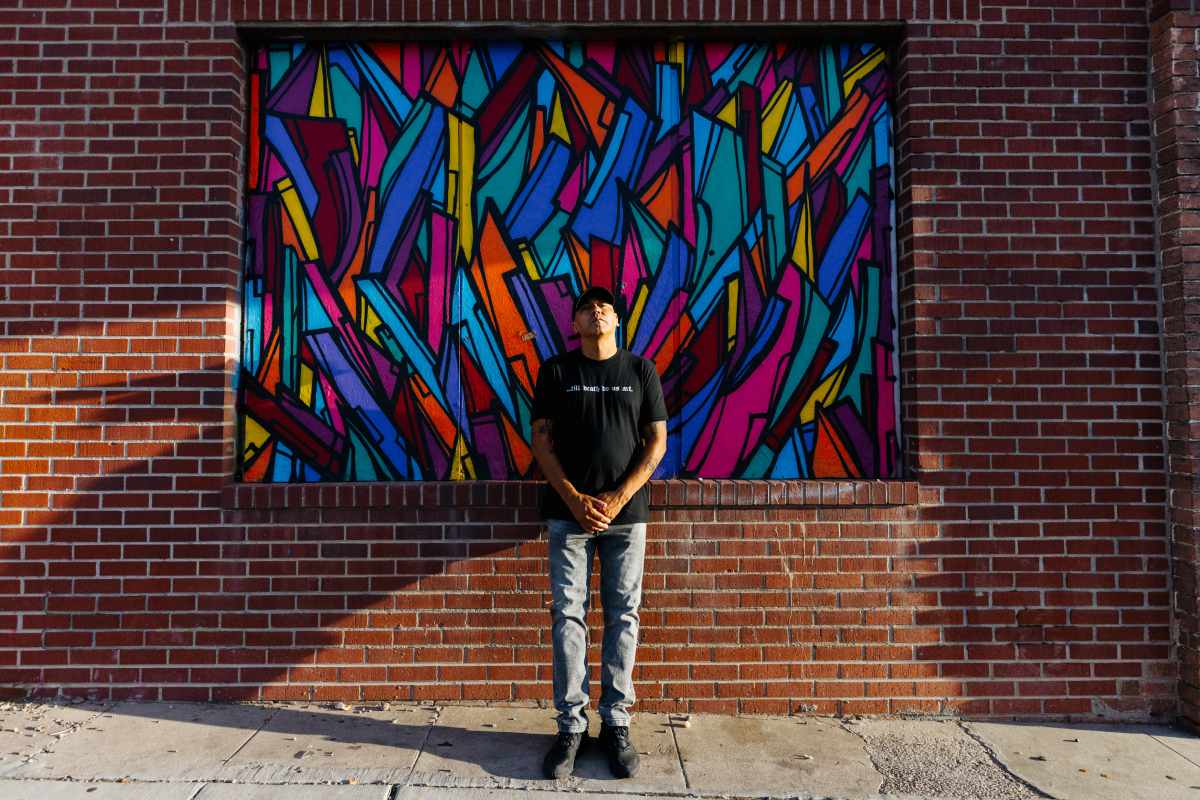
I’m Nazario Sandoval, I go by Wemfer on Instagram, and I'm an abstract muralist. I own a brand called Till Death Do Us Art and my muralist LLC. I started out as a graffiti artist and then it just kind of evolved into this abstract kind of painting and doing murals. Working with a lot of schools, the city, and tons of other organizations. It's been pretty amazing—it’s my first year doing art full time.
I have three projects— “Keep Route 66 Rolling” is a really good name for [them]. I'll be working on two projects with Lindsay at Friends of Orphan Signs and we will be revitalizing some old historical signs. We have one that's going to be in the International District, which is kind of right across from the State Fair...it's just a sign, the land is empty now. So we're going to revitalize the sign and kind of try and bring back some fresh air to it. That one will be with hubcaps and then we'll have a metal cutout of Route 66.
My next one is going to be license plate themed, over on the end of Central in the corridor of Route 66. That one's going to be 789 license plates, and then it's going to say “The Mother Road” and have a Route 66 cutout. It's going to be very challenging because it's about 30 feet high and 30 feet long. These are going to be a little more old school style, just a fabrication—a little bit out of my realm, but just trying some new stuff.
The final piece will be the biggest one—a Route 66 sculpture. We're cutting a 1950s Chevy Bel Air in half. And then we're going to make it…a sculpture that you can sit on. And then on the backside, it's going to have a big Route 66 logo with some of my color pattering inside of it with license plates as well. It will be a photo op at [M’tucci’s Bar Roma]. There'll be a lot of challenges—this one will be way, way, way out of my wheelhouse, and it's just a massive project; we're gonna have to get a crane and lift it in.
I'm working with my dad on these projects. He used to travel the route for work, so I'm also kind of honoring him in these pieces. I'm looking forward to that.
I think [it’s about] just adding those new challenges and just pushing yourself to new limits and seeing what you're actually capable of.
I think that [giant metal sculptures with coloring] are kind of an untapped market. So definitely potential for doing more stuff like that in the future.
[The Route 66 Remixed team] initially wanted me to do some painting of letters and stuff like that. They were like, “Oh, we want to see you know, you do your patterning.” But I have at least 100 murals in Albuquerque. And I think it's time to step out of the box and try something different.
If it was painting, I wouldn't worry about the timeframes or anything like that. Because I could be there and work on it with spray paint. But these are very time-sensitive projects where you got to go buy a car, bring it home, cut it, sand it down. So it's definitely been challenging.
I'm just going to do the smallest one first and then kind of just go down the line and then just be ready.
I just took a nap before this meeting. I set my alarm on that one!
Just managing your calendar, managing your emails, managing your text messages. Only you control your own destiny. I've been in business for years, working for title insurance companies and mortgage companies and all those things. And it's the same kind of thing. You respond to your customers—[in this case], the city is my customer. Anytime I'm working with [them or] you guys, it's like I'm also networking. And if you don't seize opportunities, opportunities don't always come, [especially] if you don't take care of the people sending them to you.
I was born in Albuquerque and then we lived in Grants, New Mexico. So that's where the route comes in— my dad and grandpa were uranium miners, so they drove the route all the time. My dad had a really fancy Corvette—he was a super flashy guy and he would always cruise [Route 66]. So this is more dedicated to him, and as a tribute to the past. And then we moved to Las Cruces, so we've kind of been slowly coming from the south.
It may seem like [my art’s] not a traditional New Mexico style of art, but the coloring is inspired from the sunset and the sunrise. That's what I wake up to every morning…that amazing purple. And then in the evening, it's that really orange terracotta kind of look.
I'm also working over in Grants on a Route 66 project in their corridor. It's just been really amazing that Route 66 opened a bunch of doors for me.
Never, never, never give up. It's never too late. You can always change your future. You can always rewrite the book. Our lives are a blank canvas, and we can constantly change it or repaint it. If it didn't sell, paint over it and start a new one. I think that we are our own blank canvases and that we can create whatever we want ourselves to be. And I think once we get stuck in that hamster wheel of life, we forget that.
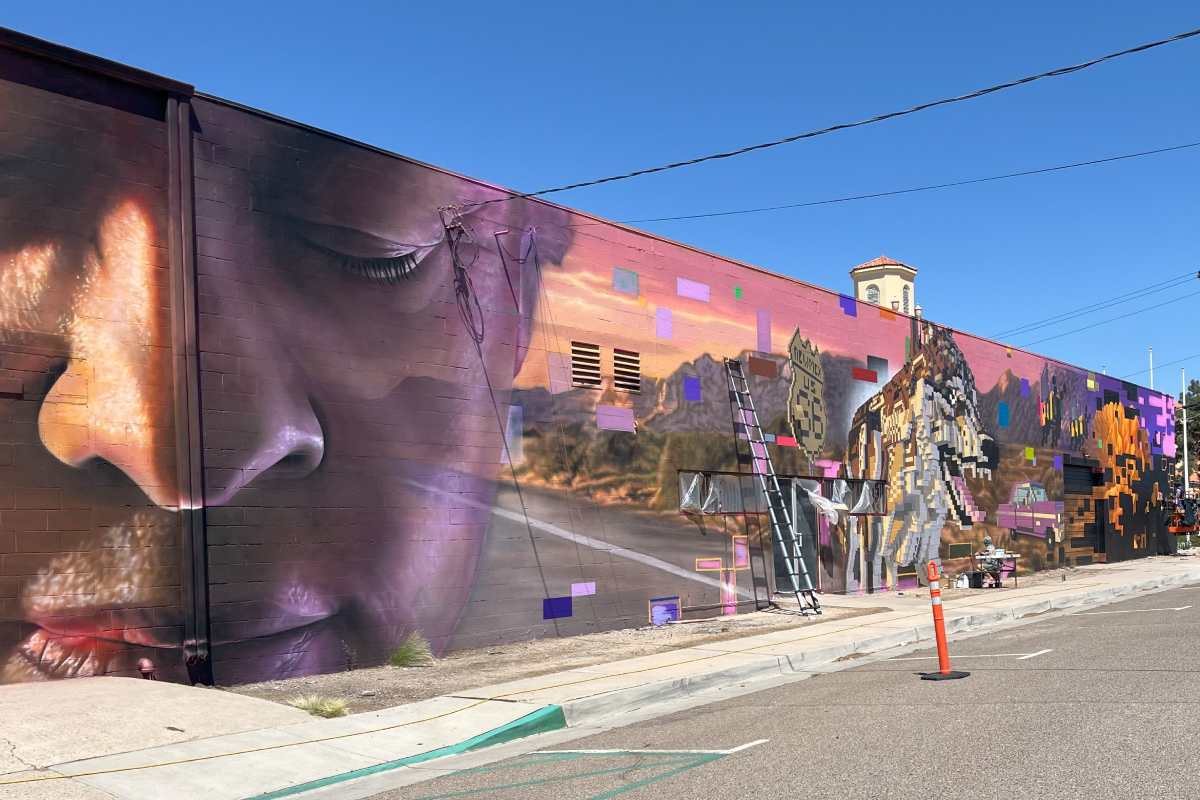
NB: My name is Noé Barnett. I'm an artist based out of Albuquerque, New Mexico, born and raised. And yeah, that's pretty much it.
TB: So I'm Travis Black. I'm a traveler here from Collin, Michigan, which is the funniest little village. This is the biggest city I've ever lived in. It was a big deal to me, seeing the highways here. Long story short, I'm an artist. I make nature paintings generally. But when my kids were born, I started getting into Legos and blocks and all that stuff. And I'm a huge gamer. So I started creating these works that were sort of virtual and speak to play and nature, but also technology.
TB: So [the City of Albuquerque] said, “Hey, we got a really big building. So we're gonna put you with this guy.” And I knew Noé’s work—this guy is a badass. And I was so pumped to have been invited to work with Noé and the city.
We first got started on, basically: how do we bridge the gap between what our works represent? How do we get the virtual world and this hyper-realistic world, and how do we put them together? And so at some point Noé came up with, well, Mother Road—that's Route 66. Noé thinks in journaling and words—once something grabs him, that will create a picture for him. Is that accurate?
NB: I think that's pretty spot on. I think a lot of my creative process has to do with reading and just understanding by just gathering information. And like Travis said, if I hear a phrase or some verbiage that sparks thought, then I'll kind of just grab a hold of that. And then again, like he said, it will spark an image.
The process to get to the final design that we settled on was pretty arduous. I'm not sure the exact timeframe, but I want to say months.
TB: Three months.
NB: The space they gave us was obviously very long and very thin - so not normal dimensions. I didn't have many requirements, but I knew I didn't want to do anything that was linear. So I was trying to think of ways to work with the wall to make you go in and out of it, not just left to right.
TB: Our first idea was memory, but also projection into the future. Mother Road, we kind of established early on, and we were like, well, who is the central figure? And Noé's like, how about my mom? And I was like, well, that's perfect for Mother Road. And it's so sweet. I just went and saw it today and it's really touching. I'm excited to see pictures of your mom with the mural, if she would ever agree to that. She's very humble when it comes. She was like, oh, you don't have to do me.
NB: She was adverse. She was not down, essentially. I had to do some convincing.
TB: It turned out so gorgeous. What happened was there was a lot of input from Meow Wolf, the city, and the university. So our ideas kind of moved around to a mind-space portal. So she's poised in a way that it looks introspective and there's this kind of action emerging from the center that’s the experience. I'm a Zen practitioner, so I always think about it in my mind as, “Is what's happening right now a story I made up? Or is it actually the experience of it?” So I like this idea that these memories are kind of reconstructed. So that's why they have this non-realistic play from the voxel side of things.
TB: It's just a 3D pixel…a three-dimensional way of representing space. It's an easy way to depict something with the computer power we had back in the day. At some point, we wanted to get into three dimensions. So there's voxels and polygons. Polygons are like an evolution of the voxel in a certain way; I do a little bit, but there's just something that's too flat about it. I'm kind of a maximalist. So working with the voxels has made me into like the slightest bit more amount of a minimalist.
NB: I think it's interesting. It's just kind of how things played out for me. I went to school at UNM, right? So I got my BFA and started in that space, having shows. Things picked up for me career-wise by painting walls and once things got busy with that, I just didn't have as much time as I would like [for fine art]. So having that on my website is kind of just me saying that I'm trying to tell people that I also want to do that.
TB: Part of the city's input was for it to be more about car culture because it's Route 66. So I was happy to bring in those voxel cars…For me, Noé has the central figure and then we designed it to go outward. And at the ends, there's these really realistic flowers and they're kind of dissolving. I always saw that as a portal and how mental space is a portal. In traditional Buddhism, the mind is an opening flower. And I always liked that idea of this expanding beauty.
NB: I had this phrase that developed: memory, map, and moment. So the middle portion was supposed to be about the moment. And then going out from that, it was gonna be the map. And then memory. So that's kind of where my head was at throughout the process. Just trying to detail all of these things, like being present where you are, but also moving and traveling and just traversing through all of these different planes mentally, like going on a road trip.
TB: My life changed doing this mural. The feeling, that encouragement from the community as we painted, was so powerful that I think when we finished, I was driving away and hit by a ton of emotion. Seeing it from the road, it just has such an impact on that scene. It was just such a privilege to be a part of that. I'm forever changed just seeing what art can do in the public—it lifts people. I'm sure some people don't like it and that's fine, but the people that stopped and said, thank you, it just meant the world to me.
I mean, I see what I do as kind of niche. To see everyday people thank me and Noé for what we're doing, it was just beautiful and I hope I can do it more. I hope I can offer more to the world in that way because it was such an amazing experience.
NB: Yeah, I would just echo that. I'm just always so grateful and reverent of the ability to create for a living. Anytime you get the opportunity to do that in a public place and in the community, don't take that lightly or for granted. That's always a blessing. So yeah, I would just agree—it’s a special thing to be able to create in a public space or create at all.



.avif)